WEEK 01: Overture
QUICK REVIEW
- This class will be a combination of lectures, exercises, and workshops. In general no late submissions will be given credit.
- There are two sites you need to be aware of: Remix Culture is "the textbook" and includes summaries of the lectures and all study materials; Blackboard is where your work will be submitted
- Appropriation in this class means taking some else’s creative work and reworking it for your own purposes.
- Cultural appropriation means the adoption, borrowing, or theft of elements of one culture by members of another culture. In general, this is more acceptable when a member of an underprivileged group appropriates the creation of a member of a privileged group than vice-versa, because the power dynamic is not fair.
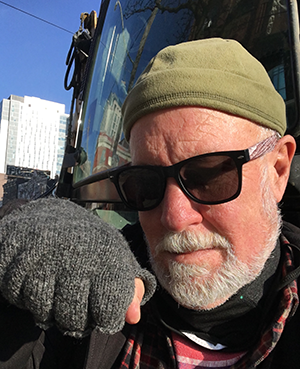
Hey,
I'm Dr Jim Nielson. I can get a kick out of being called "Dr. Jim." I used to want to be a DJ, but it was too much work. But I still try to be a bit of a DJ as a lecturer and creator of these lessons.
How this class will work
Each week there will be either new material presented by me (lecture presentations), and usually some kind of in-class exercise worth 5 marks. There will also be a quiz at the end of most classes, worth a maximum of 5 marks. As a rule, no late submissions will be accepted.
The midterm and final projects for this course will be an individual "remix" project (image, video, music, object, etc), creative and communicative ideally, in which you incorporate someone else's work and change it to make something new. You will be expected to have a multidimensional understanding of the work you have done. More details will be provided later in the course and as we go along.
Appropriation in the arts: The theme of this class
This course is about creative appropriation. Appropriation in this context is the borrowing or theft of someone else's creative work for use as part of one's own creation. We will be looking at this phenomenon from many humanist points of view: aesthetic, economic, existential, philosophical, technological, political, ethical. The focus will always be on the human impact of appropriation from a philosophical, human rights, and cultural studies point of view (as opposed, for instance, to what gear you should use to remix a song or how to monetize your TikTok appropriations successfully).
Appropriation has become a central aspect to our culture in North America, and a few years ago the greatest sampler, remixer, and mashup artist yet came on the scene: Generative AI. At this point, I started to find remix less cool and exciting, and I was no longer sure how to take it on anymore. I stepped away from the class for a few years. I'm back now to see how I feel, how you feel, where we stand. In the meantime, the historical overview of appropriation in Western culture that I provide has not been affected, and may be illuminating or inspirational (or a cautionary tale) for some of you.
The first half of the class is more of an historical overview, with the emphasis on how appropriation evolved as an increasingly common and eventually respected mode of creative activity in 19th- and 20th-century mainstream Western culture. The second half looks at how culture has become more particpatory, and how creative remix has become a common vehicle of self-expression for an increasing number of people. At the same time a number of theoretical issues, including ones that I treat as "human rights" issues, have arisen. These are complex, but if you can't imagine what I could be talking about at all, think of deep fakes.
The class is an attempt at consciousness raising, and I hope that you will join me in thinking about the media you consume and create. It has been my view that appropriation is a poweful way that humanity progresses but often also has been part of the destructive side of humanity that we can see in our own late capitalist "religion" of unbridled and unprincipled expansion, exploitation, and extraction. My goal in the past has been to suggest that there could be an ethics of appropriation, and that we should be mindful of what we are using and what we are doing with it when we use someone else's work as part of our own work.

My goal in the course is to make you a more conscious and conscientious creative appropriator. And also a more mindful consumer of other people's remixes and of culture in general. The idea is for you to experiment with creative appropriation where you fully understand the meaning of the work you are appropriating; where that original context contributes to the meaning of what you are creating; and where you are using your creative work at least in part to communicate with others.
Come to class
This course isn't just an exploration of the history, theory, and practice of creative appropriation. It is also a Liberal Studies breadth elective. The goal of such electives is to nurture and practice aspects of humanity that have been held dear in the Western humanist tradition. I would particularly highlight the following:
- Personal understanding [you paying attention to new ideas and getting them]
- Individual critical thinking [you spending time yourself reflecting on the ideas]
- Unassisted communication [you talking or writing about your thoughts without using outside aides or plagiarizing from others]
Public and academic concensus lurch back and forth on whether these are important things for a democratic citizen and fellow human to be able to do, and there is much uncertainty out there right now about whether you need these things to get a job. With Generative AI in particular, many people think we are moving beyond the point where humans have to (or can) act and think as individuals and independent thinkers. But in the meantime, my department (and me) are committed to continuing to exercise and work to develop these skills in our students and fellow human beings.
Because it's become so easy to plagiarize or get ChatGPT to do your work for you, many people are getting used to outsourcing their thinking, especially in school where they may feel disconnected and alienated anyway. Many of my colleagues (and other teachers throughout higher education) have started to move assessments into the classroom, to minimize the use of technological assistance for these core skills of understanding, thinking, and communicating. I've been trying this in my classes with some success, and I'll be trying it in this one.
So there are relatively few assignments that you do online at home. If you look at the schedule you will see that things are designed so you don't have to be at every class, but to get full marks you need to be at many of them. For instance, in the first half of the course, only two assessments are done at home, online. You need to be present in at least three of six classes to do exercises for full exercise marks (15) and you need to be present at the midtem exercise to get 7.6 marks for that. You also need to take at least three quizzes to get as close as possible to getting 15/15 (you get your three best quiz marks, so if you take all five in the first half you will have a better chance of them adding up).
You will not be able to make up missed assignments. The way the course is set up, you will have no problem getting all possible marks if you just come to class. I know it's radical, lol.
On the whole, reading these summaries will be dry and serious, like reading this one, whereas class will be wild, entertaining, and full of media, and hopefully other voices some of the time.
If you have questions or concerns about this system, please don't hesitate to contact me.